Your cooktop can look showroom-new again with a few careful moves and the right tools. Start smart, work gently, and shine last. A tidy routine beats marathon scrubbing, while small tweaks prevent damage. In this guide, you’ll learn how to treat a glass top stove so messes never linger.
Understand the surface and set yourself up for success
A glass top stove rewards a light touch. Let the surface cool completely, then clear crumbs with a soft cloth. Skip scouring pads or steel wool; they scratch. Favor pH-neutral solutions and microfiber. Minimal moisture matters because pooled water can spot, and pressure marks can haze the glass.
Choose cleaners designed for glass cooktops. Avoid bleach and ammonia; they cause streaks and damage. Gentle, circular motions lift residue without gouging. Use a damp cloth, then chase moisture with a dry, lint-free rag. Because heat bakes spills into the surface, timing and patience keep marks from becoming permanent.
What you need, in this order: Mild soap (Dawn Dish soap) or multipurpose cleaner (Fantastik); Bucket of warm water; Weiman Glass Cook Top Cleaner & Polish; Clean, soft cotton or microfiber rags; Soft brush or sponge; Razor blade; Glass cleaner (without ammonia) or distilled white vinegar in a spray bottle; Paper towels or lint-free rags.
Regular care that keeps your glass top stove spotless
Quick maintenance stretches the time between deep cleans. After each use, once cool, wipe with a soft cloth. This simple pass removes splatters before they harden. Because residue builds fast around burners, consistent care prevents scorched rings and saves you elbow grease later.
If you cook often, deep clean weekly. While the product rests on the surface, multitask around the kitchen to maximize time. Allowing formulas to dwell does the heavy lifting, so scrubbing stays gentle. Dry completely afterward so mineral spots don’t form and dull the sheen you’ve worked to restore.
Small habits matter. Lift heavy pans; don’t slide them. Keep a microfiber near the range for fast wipe-downs. Use a damp-then-dry approach to finish streak-free. These micro-routines stack the deck in your favor, so baked-on stains stop before they start and cleaning remains quick and predictable.
The step-by-step method that actually removes buildup
Start clean-out right: remove visible debris. Next, wipe with warm water mixed with dish soap or a multipurpose cleaner. This loosens grime before polishing. When chunks cling, a razor blade—used flat and carefully—lifts them without digging into the surface of your glass top stove.
Spread Weiman Glass Cook Top Cleaner & Polish across the panel. Don’t rub in yet. Let it sit 15 to 30 minutes depending on grime. That dwell time softens scorch so you won’t need force. Then scrub with a damp soft brush, cloth, or sponge to lift stains without scratching.
Wipe away residue with a wet cotton or microfiber cloth. Dry thoroughly to block water spots. If stubborn areas remain, repeat the cycle: loosen, dwell, scrub, and dry. Finish with an ammonia-free glass cleaner or a 50/50 white-vinegar mix, applied and buffed with a lint-free cloth.
Banishing stubborn marks on your glass top stove
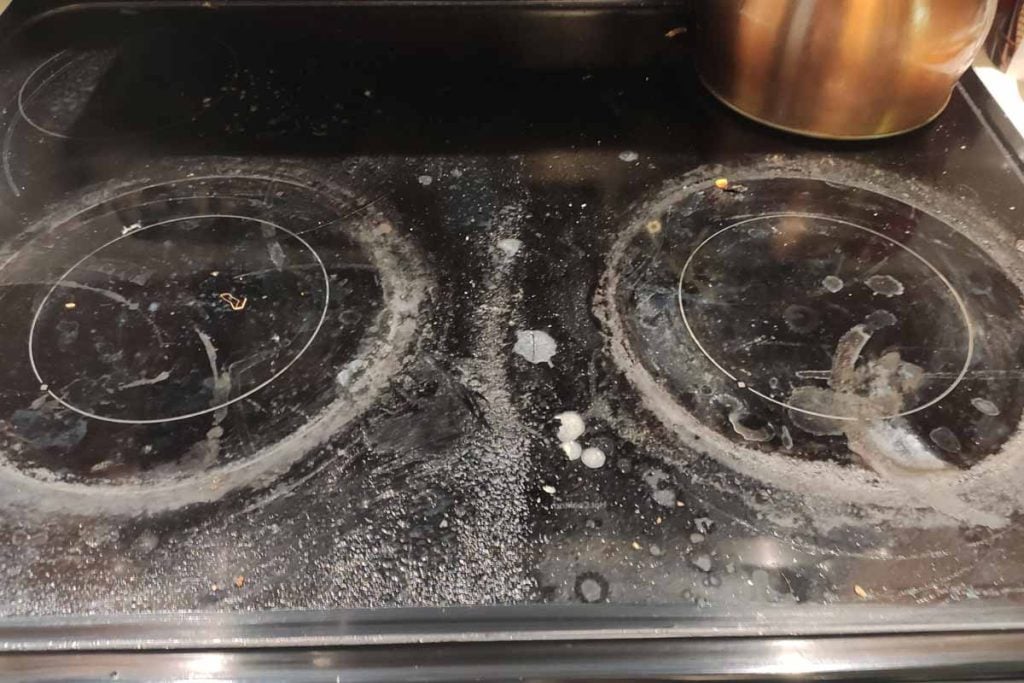
Kitchen splatters leave different scars. Oil can carbonize; tomato and chocolate can tint; hard water leaves mineral rings. Because chemistry matters, use equal parts distilled white vinegar and water to dissolve deposits. For tougher stains, add a drop of dish soap and let the solution sit 10 minutes.
For baked-on patches, sprinkle baking soda over vinegar, cover with a warm, damp cloth, and wait 10 minutes. The fizz loosens residue gently. Then scrub with a soft sponge and wipe with a damp cloth. Dry fully. Because lingering moisture spots the surface, a final buff secures clarity.
Avoid ammonia and bleach, including disinfecting wipes; they create streaks and can etch. Use ammonia-free glass cleaner for shine only after the soil is gone. Keep razor use cautious and flat to the glass. When handled this way, you’ll erase clouding from residue rather than scratch the panel.
Keep the shine, know when to call a pro
Preventive habits reduce deep-clean demands. Give the surface a quick wipe after dinner. Degrease before polish so residue doesn’t smear. Dry each zone in passes so minerals can’t settle. These moves preserve clarity and extend the life of your glass top stove between weekly sessions.
Treat blades like scalpels—effective, not aggressive. Work slowly and feel for resistance. Because sliding heavy pots can score rings, lift cookware instead. If you notice deep scratches around burners or the glass looks cloudy, professional help makes sense. Some scratches buff out; a pro decides if replacement is wiser.
Polish only at the end. Ammonia-free cleaner or that vinegar-and-water mix leaves a bright, streak-free finish. Paper towels work; lint-free rags work better. When residue reappears, repeat the dwell-and-lift cycle rather than scrubbing harder. Gentle repetition protects the surface and keeps performance steady over time.
A simple routine that protects shine without wasting your weekend
Clean smart, not hard. Cool, loosen, dwell, lift, then polish. Maintain quick wipe-downs after meals and a weekly deep clean to stop buildup early. Use cooktop-safe formulas, avoid harsh tools, and lift heavy pans. With this rhythm, your glass top stove stays bright, safe, and ready to cook.