Greasy doors that feel tacky every time you reach for a plate can make the whole room feel neglected. Light splatters build up fast, then darken into sticky film that clings to every corner. This is where four simple methods restore shine without stripping finishes from your cupboards. From dish soap to baking soda and careful use of degreasers, each step stays gentle. Add a few easy habits and grease stops settling before you even notice it.
Start with gentle dish soap and warm water
Before any cleaner, open a window or run the hood, so air stays fresh while you work. If you expect to use a stronger store product later, slip on gloves to shield your skin. Always test your mix on a hidden patch and never soak wooden doors.
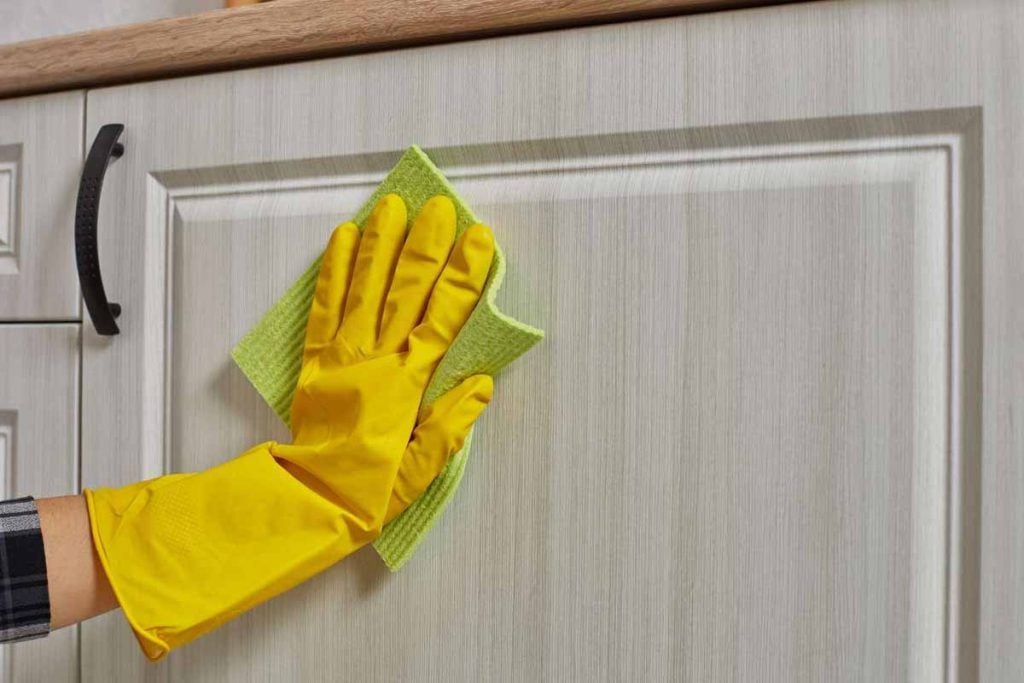
For light film after daily cooking, mild dish soap and warm water usually clean painted doors. Fill a small bowl with warm water and a few drops of liquid soap, then stir. Wipe with a damp microfiber cloth along the grain so cupboards stay smooth and free from streaks.
Keep a kit nearby so wiping never feels like a big job. Stock it with :
- dish soap
- warm water
- baking soda
- white vinegar
- lemon juice
- a commercial degreaser
- microfiber cloths or sponges
- a soft-bristle brush
- a spray bottle
- a dry towel
Vinegar spray revives dull kitchen cupboards
When soap leaves a dull film, a vinegar mix helps break down older grease without hard scrubbing. Pour equal parts warm water and white vinegar into a spray bottle, then shake. Mist sticky areas lightly, since excess moisture can creep into joints and slowly warp wooden doors.
Let the solution sit for several minutes so it can soften the greasy coating near handles and hinges. Wipe with a damp cloth, then follow with a dry towel so moisture does not linger on seams. If shine has not returned, repeat only on the worst remaining spots.
Grooves and trim sometimes trap splatters that cloths cannot reach around carved corners. In these tight spaces, use a soft-bristle brush dipped in the same solution and tap off extra liquid. Move in short strokes, rinse often, then wipe so cupboards stay evenly clean and bright.
Baking soda paste for stubborn cabinet film
When splatters bake on near the stove, baking soda paste clings where thin liquids slide away. Stir two parts baking soda with one part water in a small bowl until smooth. Add a little extra powder if it feels runny so the paste holds on vertical corners and edges.
Dab the paste directly on stained areas, keeping nearby paint or laminate as clean as possible. Let it sit for several minutes, so the fine grains can work into the greasy layer. Because baking soda is mildly abrasive, it usually loosens buildup without stripping most sealed cabinet finishes.
When time is up, wipe with a damp microfiber cloth using gentle circles instead of harsh strokes. Rinse and wring the cloth often so traces of powder do not leave pale streaks. Dry carefully with a towel, then repeat only where needed to keep cupboards uniform and smooth.
Safe use of commercial products on cupboards
If grease still clings after home mixes, a commercial degreaser can lift the final stubborn coating. Choose a product marked safe for kitchen doors or for the exact material on your fronts. Read the instructions carefully, since some sprays need contact time while others demand a quick wipe.
Always begin on a hidden section, such as the inside edge of a lower door near the hinges. Apply a small amount, wait as directed, then wipe and check the finish in bright light. If there is no dull ring or mark, continue slowly on the worst exterior panels.
For heavy buildup near handles and busy cooking zones, many people choose familiar brands. Options often include Simple Green, Method, 409, and Easy-Off used exactly as their labels state. Never mix these sprays with vinegar or other cleaners, because fumes and residue can damage cupboards.
Simple habits that keep cabinet grease away
Even the best deep clean fades fast if splatters sit for days after every frying session. Make a quick wipe part of your routine whenever you spot fresh dots near the cooker or sink. A weekly pass with warm soapy water on high-touch zones keeps thin film from turning sticky.
Airflow also shapes how much grease lands on nearby doors and shelf fronts during daily cooking. Use your range hood whenever you heat oil and let it run briefly after pans leave the heat. Moving air pulls particles toward the vent, which helps nearby walls and trim stay cleaner.
Protective finishes help every wipe work better, because grease cannot sink deep into bare wood or trim. Polyurethane, varnish, or laminate topcoats form a thin shield that resists stains and helps water bead. When doors look tired, renewing that layer keeps cupboards smooth, easy to clean, and pleasant to touch.
Keeping cabinet doors fresh with simple regular care
Taken together, these four methods create a flexible routine you can adjust to match how you cook. Light daily splatters respond well to soap and vinegar, while stubborn patches yield to baking soda and careful degreasers. Add steady ventilation and a regular wipe and grease loses its grip on door edges and corners. With a few mindful habits, your cupboards stay smooth, bright, and pleasant to touch for years.